Introduction
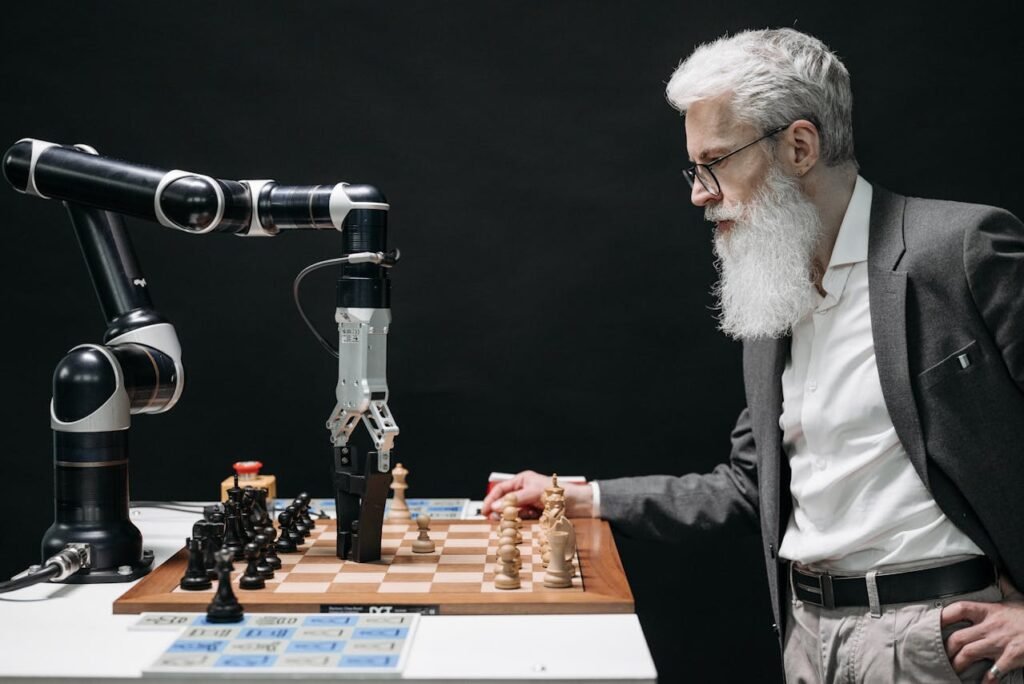
Artificial intelligence is rapidly changing how people work, learn, and create. From automation tools to advanced AI assistants, technology is now capable of performing tasks that once required human effort. This has created an important question worldwide: AI vs human work — will machines replace humans or simply change the way we work?
While AI can process large amounts of data and automate repetitive tasks, human intelligence still plays a crucial role in creativity, emotional understanding, and decision-making. Instead of competition, many experts believe the future lies in collaboration between humans and AI.
This article explores the differences between AI and human work, their strengths, limitations, and what the future of jobs may look like.
Understanding Artificial Intelligence in the Workplace
Artificial intelligence refers to computer systems designed to perform tasks that normally require human intelligence, such as learning, analyzing, and problem-solving.
Common workplace uses include:
- Data analysis
- Customer support automation
- Content generation
- Scheduling and workflow management
- Research assistance
AI tools help organizations increase efficiency by reducing manual work and improving accuracy.
External Resource:
https://www.mckinsey.com/capabilities/quantumblack/our-insights/the-state-of-ai
Internal Guide:
https://blogspirea.com/ai-for-productivity
Strengths of AI in Modern Work
1. Speed and Efficiency
AI systems can analyze massive datasets within seconds, something humans cannot do at the same scale.
2. Automation of Repetitive Tasks
AI excels at routine work such as data entry, report generation, and scheduling.
3. Consistency and Accuracy
Machines do not experience fatigue, which helps reduce errors in repetitive operations.
4. 24/7 Availability
AI tools can operate continuously without breaks, improving productivity in many industries.
Businesses adopting AI often report faster workflows and improved operational efficiency.
Strengths of Human Work
Despite technological advancement, humans possess abilities AI cannot fully replicate.
1. Creativity and Innovation
Humans create original ideas, art, and emotional storytelling that require imagination and experience.
2. Emotional Intelligence
Understanding emotions, empathy, and social interaction remain uniquely human strengths.
3. Critical Thinking
Humans evaluate ethical situations and make complex judgments based on context.
4. Adaptability
People can handle unexpected situations and learn from real-world experiences.
Human skills remain essential in leadership, education, healthcare, and creative industries.
AI vs Human Work: Key Differences
| Feature | Artificial Intelligence | Human Workers |
|---|---|---|
| Speed | Extremely fast | Moderate |
| Creativity | Limited | Highly creative |
| Emotional understanding | None | Strong |
| Accuracy | High in structured tasks | Varies |
| Adaptability | Limited to programming | Highly adaptable |
| Decision-making | Data-driven | Experience + emotion |
The comparison shows that AI and humans excel in different areas.
Jobs Most Affected by AI
AI is transforming roles that involve repetitive or predictable tasks.
Examples include:
- Data entry
- Basic customer support
- Manufacturing processes
- Simple content generation
- Administrative tasks
Automation allows companies to focus human workers on higher-value responsibilities.
Jobs Where Humans Remain Essential
Many professions rely heavily on human qualities.
Examples:
- Healthcare professionals
- Teachers and educators
- Creative artists and writers
- Psychologists and counselors
- Leadership and management roles
These careers require empathy, ethical judgment, and creativity — areas where AI still struggles.
Collaboration: The Real Future of Work
Experts increasingly describe the future as AI + Humans, not AI versus humans.
AI can:
- Handle analysis and automation
Humans can:
- Provide creativity and strategic thinking
Together, this collaboration improves productivity and innovation.
Research suggests workers using AI assistance often perform tasks faster and with improved quality compared to working alone.
Advantages of AI in the Workplace
- Increased efficiency
- Reduced operational costs
- Faster decision support
- Improved data analysis
- Automation of routine work
Challenges and Concerns
Job Displacement
Some roles may change or disappear due to automation.
Skill Gap
Workers must learn new digital and AI skills.
Ethical Issues
AI decisions may raise concerns about fairness and privacy.
Organizations must balance innovation with responsible AI usage.
Skills Humans Need in the AI Era
To stay competitive, workers should focus on skills that complement AI:
- Creative thinking
- Problem solving
- Communication skills
- Emotional intelligence
- Digital literacy
- Critical reasoning
Learning how to work alongside AI tools is becoming an essential career skill.
AI vs Human Productivity
AI improves efficiency by reducing repetitive workload, while humans contribute innovation and strategic insight.
Studies show AI-assisted workers can complete tasks faster while maintaining higher quality output when human oversight remains involved.
The strongest productivity gains happen when AI supports human decision-making rather than replacing it.
Future Outlook: Will AI Replace Humans?
Most experts agree that AI will not completely replace humans but will transform job roles.
New opportunities are emerging, including:
- AI trainers
- Data analysts
- Automation specialists
- AI ethics consultants
- Digital creators
Technology historically creates new industries even as it changes old ones.
Conclusion
The debate around AI vs human work is not about replacement but transformation. Artificial intelligence excels at speed, automation, and data processing, while humans lead in creativity, empathy, and complex reasoning.
The future belongs to those who learn to collaborate with AI rather than compete against it. By combining human intelligence with artificial intelligence, society can achieve higher productivity, innovation, and better working environments.